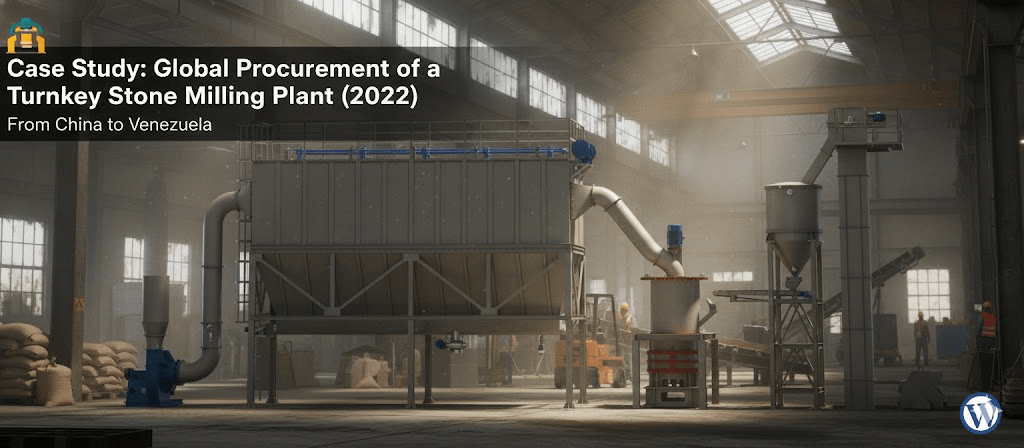
In 2022, I managed a challenging global procurement project that involved securing a turnkey stone milling plant from China for a client in Panama, with the ultimate destination and end-user being a company in Venezuela. This project required a meticulous approach, blending technical due diligence on the plant design with complex cross-border logistics and a comprehensive cost analysis.
Phase 1: Determining Specifications and Planning
The initial and most crucial step was to clearly define the technical requirements for the stone milling plant. Stone milling involves grinding grain using rotating stones, a process distinct from modern roller mills that typically produce higher-volume, less rustic flour.
- Plant Design and Specifications: The client required a “turnkey” solution, meaning a complete operational system, including the millstones, drive mechanisms, cleaning systems (separators, destoners, magnets), and packaging/storage facilities. Key specifications focused on:
- Mill Type: Likely traditional horizontal stone mills or modern vertical stone mills (smaller footprint, higher speed). We focused on understanding the preferred stone material (e.g., granite, French Burr) and the crucial furrow patterns on the grinding surfaces, which determine the efficiency and quality of the final product (fineness and extraction rate).
- Capacity: The required output in tons per 24 hours.
- Ancillary Systems: The design needed to include effective tempering (moisture adjustment) and aspiration (dust removal and cooling) systems to ensure flour quality and a safe, clean operating environment.
- Procurement Strategy and Planning: Given the complexity of the equipment and the geopolitical/logistical constraints between China and Venezuela, the plan focused on Risk Management and Total Cost of Ownership (TCO). Key steps included:
- Defining a clear procurement lifecycle (Specification $\to$ Sourcing $\to$ Evaluation $\to$ Negotiation $\to$ Logistics).
- Budget allocation and defining the cost breakdown structure (Equipment Cost, Freight/Logistics, Import Duties/Taxes, Installation/Commissioning).
Phase 2: Sourcing, Evaluation, and Selection
The search focused primarily on specialized Chinese manufacturers known for providing complete milling solutions.
- Finding Possible Suppliers: We compiled a long list of five potential Chinese manufacturers based on industry reputation, experience with turnkey projects, and export history.
- Evaluation and Vetting: The five suppliers were evaluated against criteria that included:
- Technical Compliance: Adherence to the defined milling specifications.
- Experience & References: Track record of successful international projects, particularly in Latin America.
- Quality Management: Certifications and material quality (e.g., millstone source).
- Quoted Cost (Ex-Works and FOB): Initial price assessment.
- Lead Time: Manufacturing and delivery schedules.
- Supplier Shortlist: After initial technical and commercial comparison, the list was narrowed down to two preferred suppliers. This selection prioritized high technical compliance and robust quality control, even if their initial quotes were slightly higher than others.
Phase 3: Total Cost of Ownership (TCO) Analysis
The final decision hinged on a detailed TCO analysis, which is critical for global procurement and goes far beyond the initial purchase price.
- TCO Components Analyzed:
- Acquisition Cost: Ex-Works price, export packaging, and loading.
- Freight & Logistics: CIF (Cost, Insurance, and Freight) cost from China to the port in Venezuela, factoring in specialized handling for heavy, sensitive milling equipment. This involved comparing rates for ocean freight and insurance.
- Importation Cost: Venezuelan import duties, VAT, and customs clearance fees. These costs were substantial and required local expertise.
- Installation & Commissioning: Cost of having the Chinese vendor’s technical team travel to Venezuela for assembly and start-up, including visas and accommodation.
- Operating Costs: Estimated energy consumption, maintenance, and projected cost of spare parts (e.g., replacement millstones, belts).
- Presentation of Results: The TCO showed that while one supplier had a lower acquisition cost, the other had a significantly better warranty and lower long-term operating costs (better energy efficiency and projected spare parts longevity). This made the higher-priced option the best value for money over a five-year horizon.
Phase 4: Forward Strategy and Presentation
The final presentation to the client was designed to be clear, visually engaging (utilizing slide templates common in procurement presentations), and focused on the value proposition.
- Final Recommendation: The report recommended the supplier with the higher initial cost but lower TCO and better long-term technical support.
- Go-Forward Strategy: The proposed next steps included:
- Final Negotiation: Leveraging the TCO data to negotiate a better deal with the chosen supplier (e.g., reduced commissioning fee or discounted spare parts package).
- Contract Finalization: Drafting a precise procurement contract, including Incoterms (CIF Venezuela was recommended), payment terms, and clear penalty clauses for late delivery or non-conformance.
- Logistics Coordination: Appointing a freight forwarder specializing in imports into Venezuela to manage customs and inland transport.
This project demonstrated the complexity of international procurement, where the success of a “turnkey” project depends as much on meticulous planning and TCO analysis as it does on the equipment’s technical specifications.
 Victoria miranda